
Hondo’s Comprehensive Plan: Start With the Questions That Matter
How do you make a comprehensive plan that actually matters?
Make it about the spine, and let everything else follow from there.
Last week, I spent time in City of Hondo, Texas, a community of about 9,000 people, exploring the city and meeting with City leadership and staff as ASH+LIME continues our work on its Comprehensive Plan update, with support from Verdunity.
Hondo is roughly 40 miles west of San Antonio, placing it on the edge of a booming region. As the county seat of a growing county, it plays a much larger regional role than its population might suggest. The city serves as an employment, healthcare, and shopping hub for the surrounding area, with substantial airport and rail intermodal infrastructure.
As you might imagine, Hondo faces increasingly urgent decisions about its future.
How can Hondo grow without losing what people value about its small-town character? How can infill and reinvestment strengthen downtown and existing neighborhoods? How can the City accommodate new development without taking on infrastructure obligations it can’t afford to maintain? How can Hondo turn its airport, rail, and regional employment strengths into more opportunities for local businesses and residents?
Those are the kinds of questions that should form the spine of a comprehensive plan.
From the very beginning, we’ve been centering our research and conversations around these questions and the opportunities, choices, and tradeoffs behind them. They shape what we investigate, what information we gather, how we engage the community, and ultimately what we recommend.
To be fair, most comprehensive plans do try to address questions like these. But too often, the process starts with a checklist of chapters to write, maps to produce, and data to compile, rather than with the questions the community actually needs to answer.
The result can feel like a book that starts with the appendix and only gets around to telling you what it’s about toward the end.
Organizing the plan around these questions helps ensure that its recommendations address the decisions the community actually faces, the choices available to it, and the consequences of those choices.
A truly great comprehensive plan should be something an interested resident might actually want to read because it speaks directly to the future of their community.
Small communities make significant investments in comprehensive planning. They deserve a tailored assessment and strategy that helps them make real decisions about their future, not a formulaic document that could largely have been written from a template.
I’ve really appreciated the leadership and vision Hondo is bringing to this process. It’s been rewarding to work with a community that’s taking this effort seriously and looking for practical ways to turn its aspirations for the city into real action.
Originally published on LinkedIn, November 2, 2026. Republished in ASH+LIME Insights.
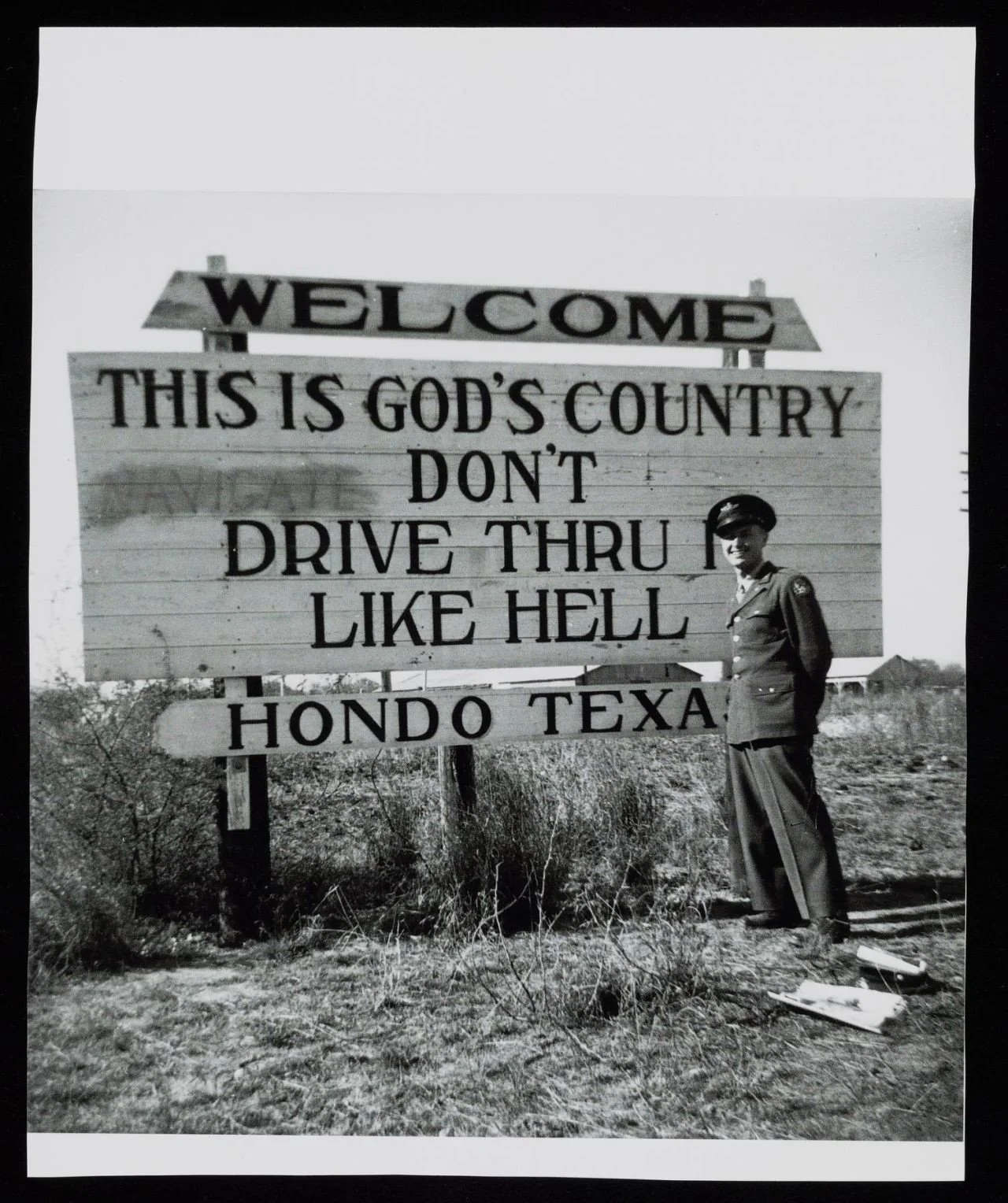
Photo: “Gordon Weir Posing with Sign,” Hondo Public Library, via The Portal to Texas History, University of North Texas Libraries.